This article is republished from アジア財経観察
By Li Da in Tokyo
The ASEAN story is one of factories, orders and ports. Central and South Asia tell a different story — one built around railways, pipelines, corridors and rules.
According to Chinese customs data, trade between China and Central Asia surpassed $100 billion in 2025, making China the region’s largest trading partner. Cooperation is also moving beyond traditional resource trade toward green energy, digital infrastructure and industrial development.
Six countries are emerging with six different advantages.
Kazakhstan is positioning itself as a hub, turning resource advantages into industrial-chain capacity. Uzbekistan is winning through manufacturing, with new vehicle, solar and energy-storage projects helping transform it from a transit corridor into a production base. Kyrgyzstan is betting on corridors and rules, while Tajikistan is improving connectivity through hydropower, mining and multimodal transport. Turkmenistan remains critical through energy, and Pakistan stands out for its strategic depth, using CPEC to move from infrastructure toward broader industrial development.
Corridors and Rules Come First
The land-based version of “China Plus One” differs from Southeast Asia.
In ASEAN, the question is often where factories should move. In Central and South Asia, the first task is to build transport links and institutional frameworks.
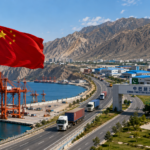
Kyrgyzstan illustrates this clearly. The China–Kyrgyzstan–Uzbekistan railway, launched in December 2024, is expected to create a shorter overland route between China and Central Asia. For landlocked Kyrgyzstan, the railway could turn geographic disadvantage into transit and industrial value.
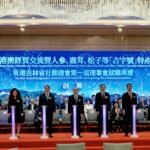
The Tamchy Financial Investment Zone, launched in 2026, adds an institutional layer. Built around an English common-law framework, independent regulation and international dispute resolution, the zone is designed to attract international and Chinese investors seeking a predictable legal environment.
Pakistan is following a similar path through CPEC 2.0. The first phase focused on roads, ports and power plants. The second is moving into manufacturing, agriculture, mining, IT and special economic zones.
The logic is simple: once the corridor is open and the rules are in place, capital and industry can follow.
From Raw Materials to Industrial Chains
Kazakhstan is shifting from exporting minerals toward processing more of them domestically. Chinese-backed copper projects, including the Verkhuba mine and a recycled-copper project in Aktobe, reflect a broader attempt to build industrial value around natural resources.
Uzbekistan is taking a more manufacturing-led path. BYD’s Jizzakh plant has annual capacity of 50,000 vehicles, while JAC’s Tashkent project is expected to expand to 30,000 vehicles in its second phase.
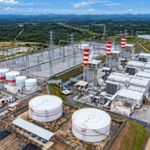
Turkmenistan remains the most energy-focused case. The China–Central Asia gas pipeline has delivered about 460 billion cubic meters of gas to China, while most of Turkmenistan’s gas exports continue to flow to the Chinese market.
Tajikistan, though smaller, is using hydropower, mining and logistics projects to improve external connectivity.
Pakistan’s model is broader still. CPEC has brought $25.93 billion in direct investment, created about 261,000 jobs, and supported an expanding network of special economic zones. Its goal is no longer simply to receive infrastructure investment, but to use that foundation to build stronger domestic industrial capacity.
Commentary | From Corridors to Growth
Central and South Asia’s “China Plus One” story is less about moving individual factories and more about changing the economic geography of the region.
Railways reshape access. Pipelines redirect resources. Financial zones create new rules. Industrial parks and special economic zones bring production closer to markets.
That is why these countries are not merely receiving Chinese investment. They are trying to turn infrastructure and connectivity into long-term industrial capacity.
From ASEAN’s factories and ports to Central Asia’s railways and pipelines, “China Plus One” is taking different forms across different regions.
The maritime route is about moving production.
The continental route is about building the channels first.
And once those channels are in place, industry can begin to grow around them.