“ You love me, I love you, Mixue Bingcheng, sweet and lovely…”

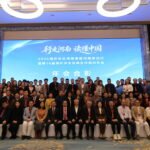
Accompanied by the familiar melody, representatives of overseas Chinese-language media visited the headquarters of Mixue Bingcheng in Zhengzhou on November 26, exploring how the Chinese beverage giant has expanded into global markets.
Guided by staff, the guests entered the flagship store at the headquarters, sampling a range of the brand’s signature drinks while enthusiastically taking photos with the “Snow King” mascot displayed throughout the space.
“I had heard so much about Mixue Bingcheng, and today I finally got to try it. I didn’t realize the product range was so extensive — they have coffee, fruit drinks and so much more, and everything tastes good,” media representatives said as they exchanged impressions. Some also asked staff about the preparation process in detail.
“Is it always this crowded here?” guests asked in surprise after seeing the long queue outside the store.
“Today is actually relatively quiet,” the guide replied with a smile. “During holidays, the queue can wrap around the building. Many foreign tourists also come here specifically to line up just to try a cup of Chinese tea drink.”
As one of the world’s leading freshly prepared beverage companies, Mixue Bingcheng impressed the visiting delegation with the speed of its development. Yang Kyu-hyun, president of South Korea’s Aju Business Daily, said during the visit: “Its founder started a business at just 19 years old, which is remarkable. I had previously introduced the history of Mixue Bingcheng to Korean audiences on YouTube. After seeing it in person this time, I definitely want to visit its stores in South Korea and conduct a more in-depth study when I return.”
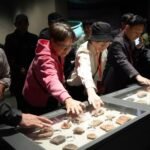
Inside the exhibition hall, the company’s development could be traced from the creation of the “Snow King” IP in 2018, to high-quality affordable fruit drinks costing around US$1, and to a global procurement network spanning 38 countries across six continents. Through an approachable brand image and a powerful supply-chain system, Mixue Bingcheng has built an extensive business network.
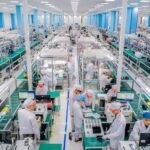
The digital supply-chain system displayed on site showed that around 90% of county-level administrative areas in China can be reached within 12 hours, while cold-chain logistics coverage has reached 97%.
Global expansion was one of the most frequently discussed topics during the visit. Mixue Bingcheng currently operates around 64,000 stores across 19 countries worldwide and has established localized warehousing systems in nine overseas markets.
After learning that the brand had successfully entered markets including Malaysia and Indonesia, as well as newer destinations such as Mexico and Brazil, a number of guests began asking on site about investment and partnership opportunities.
“Although Mixue Bingcheng already has a presence in the United States, there is currently no store in the state where I live,” said Cheng Ruzhao, president of the U.S.-based Huaxing Daily, in an interview. He said he was optimistic about the global expansion of Chinese brands and hoped to connect with Mixue Bingcheng, with the possibility of helping Chinese brands establish a stronger local presence in the United States.

From a cup of lemonade costing just a few yuan to a “sweet business” that supports more than 785,000 jobs, Mixue Bingcheng is using its extensive industrial chain to connect corporate responsibility with the tastes of consumers around the world.
As the visit came to an end, a long queue still remained outside the flagship store. At that moment, the small beverage cup had become a vivid example for overseas Chinese-language media of how “Made in China” is evolving into “Chinese brands.”